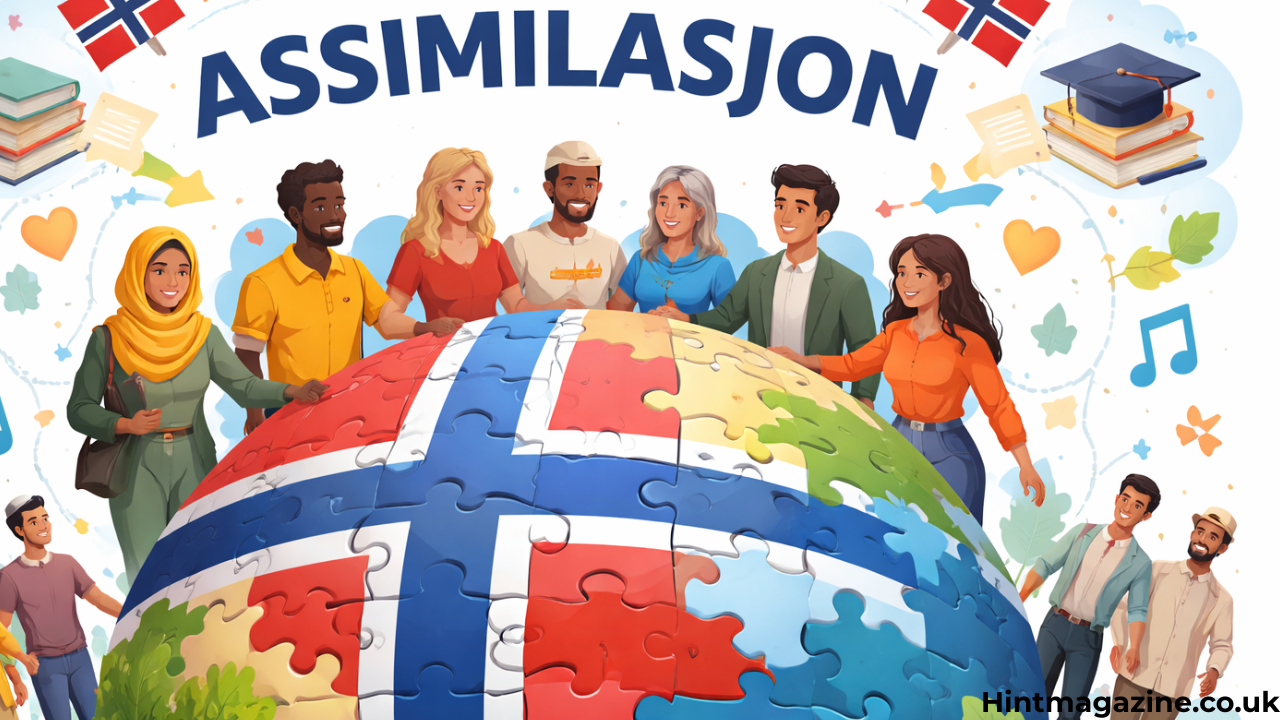
Assimilasjon. It sounds academic, doesn’t it? But in reality, it’s something deeply human. It’s about change. It’s about identity. And sometimes, it’s about survival.
Have you ever moved to a new city and slowly started talking like the locals? Or picked up new habits without even realizing it? That’s assimilation in action. It’s subtle. Quiet. But powerful.
Let’s break it down together.
What Is Assimilasjon?
Definition and Origin of the Term
Assimilasjon, often translated as assimilation, refers to the process where individuals or groups adopt the culture, language, values, and behaviors of another dominant group. Over time, their original cultural traits may fade.
The word comes from the Latin term “assimilare,” meaning “to make something similar.” And that’s exactly what happens — people gradually become more alike.
Think of it like pouring cream into coffee. At first, you can see the difference. But stir it long enough, and it blends completely.
Assimilation vs Integration – Key Differences
Here’s where people get confused.
Assimilation means adapting fully — sometimes losing parts of your original culture.
Integration, on the other hand, allows people to maintain their cultural identity while participating in the larger society.
Assimilation says: “Become like us.”
Integration says: “Join us, but stay with you.”
Big difference, right?
Historical Background of Assimilasjon
Assimilation in Ancient Civilizations
Assimilasjon isn’t new. The Roman Empire did it. When Rome conquered territories, they spread Roman law, language, and customs. Over time, conquered people adopted Roman identity.
It wasn’t always forced. Sometimes, it happened naturally because Roman culture offered economic and political advantages.
Colonial and Modern Assimilation Policies
During colonial times, assimilation often became official policy. Indigenous communities were pressured to abandon their languages and traditions.
In many countries, assimilation was seen as the “solution” to cultural diversity. Governments believed unity required sameness.
But at what cost?
Types of Assimilasjon
Assimilation isn’t one-size-fits-all. It happens in different ways.
Cultural Assimilation
This involves adopting traditions, dress styles, food habits, and social norms of the dominant culture.
Over time, festivals, rituals, and cultural practices may fade.
Linguistic Assimilation
Language is powerful. When immigrants stop speaking their native language and fully adopt the dominant one, that’s linguistic assimilation.
It’s often one of the first visible signs of change.
Social Assimilation
This occurs when individuals form relationships within the dominant group — friendships, marriages, and professional networks.
Social circles shift. Identity shifts with them.
Structural Assimilation
Structural assimilation happens when minority groups gain access to institutions like education systems, government roles, and economic structures.
It’s about inclusion at a systemic level.
The Assimilation Process Explained
First Generation Immigrants
First-generation immigrants usually hold tightly to their original culture. They speak their native language at home. They cook traditional food.
But they adapt where necessary — especially at work or school.
Second and Third Generations
Now things change.
Children of immigrants often grow up speaking the dominant language fluently. They attend local schools. Their cultural identity blends.
By the third generation, original traditions may become symbolic rather than central.
Identity Transformation Over Time
Identity doesn’t disappear overnight. It evolves.
It’s like layers of paint on a wall. The original color is still there — but covered.
Why Does Assimilasjon Happen?
Social Pressure
Humans want belonging. We don’t like standing out too much.
When society rewards similarity and punishes difference, assimilation speeds up.
Economic Opportunities
Let’s be honest. Better jobs, better education, and financial stability often require adaptation.
People change because opportunity demands it.
Political Systems
Some governments encourage assimilation for national unity. Others promote diversity.
Policy matters. A lot.
Benefits of Assimilasjon
Social Unity
Shared language and values can create social harmony.
When people understand each other, cooperation becomes easier.
Economic Growth
Assimilation can help immigrants access job markets quickly, boosting economic productivity.
It reduces social friction and increases efficiency.
National Identity Strengthening
A common identity can create a strong sense of belonging and patriotism.
But again — balance is key.
Challenges and Criticism of Assimilasjon
Loss of Cultural Identity
This is the biggest criticism.
Languages disappear. Traditions vanish. Unique worldviews fade away.
Is unity worth losing diversity?
Discrimination and Marginalization
Ironically, even when minorities assimilate, discrimination may still exist.
Assimilation doesn’t always guarantee acceptance.
Psychological Impact
Identity conflict can cause stress.
Imagine feeling “not enough” in both cultures. That emotional tension is real.
Assimilasjon in Modern Multicultural Societies
Globalization and Cultural Exchange
Today, cultures blend faster than ever.
Music, fashion, food — everything travels instantly. Assimilation isn’t one-directional anymore. It’s a mutual influence.
Digital Age Influence
Social media accelerates cultural adaptation.
Trends spread worldwide in seconds. Digital platforms create global cultural norms.
Assimilation now happens online too.
Assimilasjon vs Multiculturalism
Comparing the Two Models
Assimilation promotes sameness.
Multiculturalism promotes diversity within unity.
Both aim for social stability — but through different strategies.
Which One Works Better?
There’s no simple answer.
Some societies thrive on shared identity. Others flourish through diversity.
Maybe the future lies somewhere in between.
Real-World Examples of Assimilasjon
In many Western countries, immigrant communities gradually adopt national languages and customs.
Second-generation immigrants often identify more strongly with their birth country than their ancestral homeland.
It’s not forced. It’s gradual. Almost invisible.
The Future of Assimilasjon
The world is becoming more connected.
Complete assimilation may become less common, replaced by hybrid identities.
Instead of losing culture, people may combine multiple identities.
Maybe the future isn’t about blending completely — but about layering identities.
Conclusion
Assimilasjon is complex. It’s not simply good or bad.
It brings unity — but may reduce diversity.
It offers opportunity — but can create identity struggles.
At its core, assimilation is about human adaptation. It’s about survival, belonging, and change.
The real question isn’t whether assimilation happens.
The real question is: How do we balance unity and diversity in a way that respects everyone?
That’s the conversation we need to keep having.
FAQs
Is assimilasjon the same as integration?
No. Assimilation involves fully adopting the dominant culture, while integration allows individuals to maintain their original identity alongside participation in society.
Does assimilasjon always mean losing culture?
Not always, but it often reduces the visibility of original cultural traits over generations.
Why do immigrants assimilate?
Common reasons include economic opportunities, social acceptance, and political pressure.
Is assimilasjon beneficial for society?
It can create unity and economic growth, but it may also reduce cultural diversity.
What is the future of assimilasjon in a globalized world?
Hybrid identities and multicultural models are likely to become more common than full cultural assimilation.