
Cadibara: Everything You Need to Know 2026
Important clarification:
Many people mistakenly write “cadibara”, but this is not the correct term. The correct and scientifically accepted name is Capybara. Capybara is a real animal and the world’s largest rodent, while “cadibara” is simply a spelling mistake. This article is written using the correct keyword Capybara and provides accurate, factual information about the animal.
Introduction
The Capybara is one of the most unique and fascinating animals found in nature. Known for its calm personality and friendly behavior, the capybara is recognized as the largest rodent in the world. Native to South America, this animal has gained global popularity due to its peaceful nature, social lifestyle, and ability to live comfortably alongside many other species. This article explains the capybara in detail, covering its habitat, behavior, diet, physical traits, and role in the ecosystem.
What Is a Capybara?
The capybara is a semi-aquatic mammal belonging to the rodent family. Unlike smaller rodents, it has a large, heavy body and a gentle temperament. Adult capybaras can weigh more than 60 kilograms, making them significantly larger than any other rodent species.
Their body is specially adapted for water-based living. With slightly webbed feet and a streamlined shape, the capybara is an excellent swimmer and often relies on water for safety and comfort.
Natural Habitat of the Capybara
Geographic Distribution
Capybaras are native to South America and are commonly found in Brazil, Venezuela, Colombia, Argentina, and Peru. Their presence is closely linked to regions that have abundant freshwater sources.
Preferred Environment
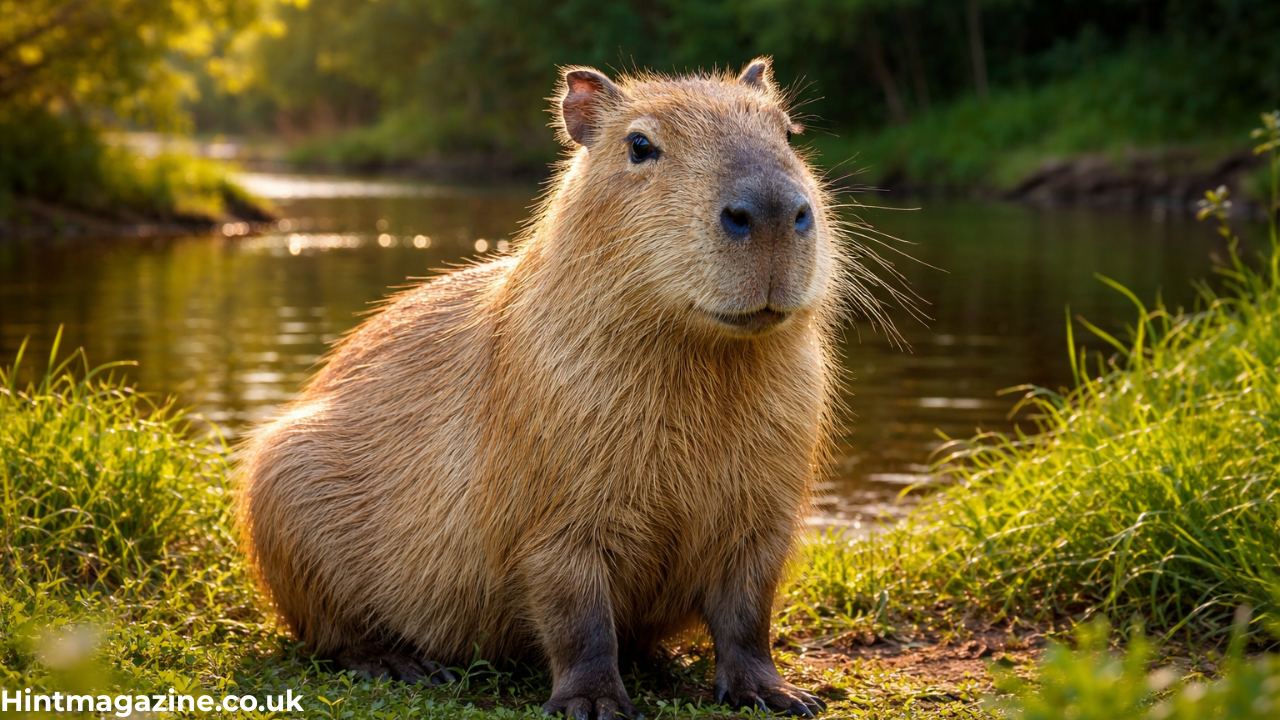
The capybara prefers wetlands, riverbanks, marshes, lakes, and flooded grasslands. Water is essential to their survival, as it helps regulate body temperature, provides protection from predators, and supports their feeding habits.
Physical Characteristics
Size and Appearance
The capybara has a barrel-shaped body, short legs, and coarse fur that ranges from brown to reddish-brown. It has no visible tail, which gives it a rounded appearance. Its eyes, ears, and nostrils are positioned high on the head, allowing it to stay alert while swimming.
Unique Adaptations
Capybaras have strong, continuously growing teeth designed for grazing tough vegetation. Their skin contains scent glands used for communication and marking territory within their social groups.
Behavior and Social Structure
Highly Social Nature
Capybaras are extremely social animals and usually live in groups of ten to thirty individuals. These groups are led by a dominant male and include females, young capybaras, and subordinate males.
Living in groups increases safety and strengthens social bonds. Communication occurs through vocal sounds, body language, and scent marking.
Daily Activity
Capybaras are most active during early morning and late afternoon. In hot regions, they may become more active at night. During the hottest hours of the day, they rest in shaded areas or remain partially submerged in water.
Diet and Feeding Habits
Herbivorous Diet
The capybara is a strict herbivore. Its diet mainly consists of grasses, aquatic plants, fruits, and tree bark. Grazing occupies a large portion of its daily routine.
Digestive Process
Capybaras practice coprophagy, which involves re-eating certain droppings to extract additional nutrients. This natural process helps them digest fibrous plant material efficiently and maintain good health.
Reproduction and Life Cycle
Breeding Patterns
Mating usually occurs during the rainy season when food is plentiful. After a gestation period of about five months, females give birth to two to eight pups.
Development of Young
Newborn capybaras are well developed. They can walk, swim, and eat solid food within days of birth. However, they continue to nurse while learning important social behaviors from the group.
Predators and Defense Mechanisms
Natural Predators
Capybaras face threats from jaguars, anacondas, caimans, and large birds of prey. Young capybaras are more vulnerable due to their smaller size.
Survival Strategies
Water serves as the capybara’s main defense. When threatened, they quickly dive underwater and can stay submerged for several minutes. Group vigilance also helps detect danger early.
Role in the Ecosystem
Environmental Importance
Capybaras help maintain healthy grasslands by controlling vegetation growth through grazing. This supports biodiversity and prevents overgrowth.
Interaction with Other Animals
Capybaras are known for their peaceful tolerance of other species. Birds, monkeys, and even reptiles are often seen resting near or on them, showing rare interspecies harmony.
Capybara and Human Interaction
Cultural Significance
In South America, capybaras hold cultural value and appear in local traditions and folklore. They have been part of human history for centuries.
Modern Popularity
In recent years, the capybara has become famous worldwide due to social media and wildlife documentaries. Its relaxed personality has made it a symbol of calm and friendliness.
Conservation Status
Population Health
Capybaras are currently not endangered. Their adaptability and wide distribution help maintain stable populations.
Human Impact
Habitat destruction and hunting pose risks in some areas. Conservation efforts and responsible environmental practices are important for long-term protection.
Ethical Considerations
Although capybaras appear gentle, they are wild animals with complex needs. Keeping a capybara as a pet requires legal permission, large living spaces, water access, and social companionship. Improper care can harm their physical and mental well-being.
Conclusion
The Capybara is a remarkable animal that perfectly demonstrates adaptability, social harmony, and peaceful coexistence. As the largest rodent in the world, it plays a vital role in maintaining ecosystem balance while captivating human interest globally. Understanding that the correct name is Capybara, not “cadibara,” is essential for accurate knowledge and responsible education. By respecting this animal and its natural habitat, we contribute to preserving one of nature’s most extraordinary creatures.