StabiliTrak: What It Means and What to Do When the Light Comes On 2026
If you drive a Chevrolet, GMC, or another General Motors vehicle, you may eventually see a StabiliTrak warning on the dashboard. The message can be confusing, especially if the car still seems to drive normally. StabiliTrak is an electronic stability control system designed to help keep the vehicle moving in the direction the driver intends, particularly when traction is reduced or the vehicle begins to lose stability.
There are two important things to understand about StabiliTrak: what the system does and why the warning light may appear. Knowing both can help you react safely and avoid unnecessary repairs.
What Is StabiliTrak and How Does It Work?
StabiliTrak is General Motors’ electronic stability control system. It works with the vehicle’s traction control, anti-lock braking, and other sensors to monitor how the vehicle is moving.
How StabiliTrak Helps the Driver
The system constantly compares the driver’s steering input with the vehicle’s actual movement. If the vehicle starts moving differently from what the driver intends, StabiliTrak can intervene.
For example, imagine driving around a wet corner and the vehicle starts to slide slightly. The system can apply braking to individual wheels and, depending on the vehicle, reduce engine power. These actions are designed to help the vehicle regain stability.
StabiliTrak can be especially useful on wet, icy, snowy, or loose roads. It does not replace careful driving, good tires, or proper braking, but it provides an additional layer of electronic assistance.
The system normally operates automatically. In most situations, the driver does not need to activate it manually.
StabiliTrak and Traction Control Are Not Exactly the Same
These systems work closely together, but they have different jobs.
Traction control mainly helps prevent the drive wheels from spinning when accelerating. StabiliTrak focuses more broadly on vehicle stability and steering direction.
Because the systems share sensors and electronic components, a problem with one system can sometimes cause warning messages related to the other.
Why Does the StabiliTrak Warning Appear?
A StabiliTrak warning does not always mean the stability system itself is broken. The warning can be triggered by problems elsewhere in the vehicle, particularly when a sensor or electronic component sends information that the vehicle computer considers unreliable.
Common Causes of a StabiliTrak Warning
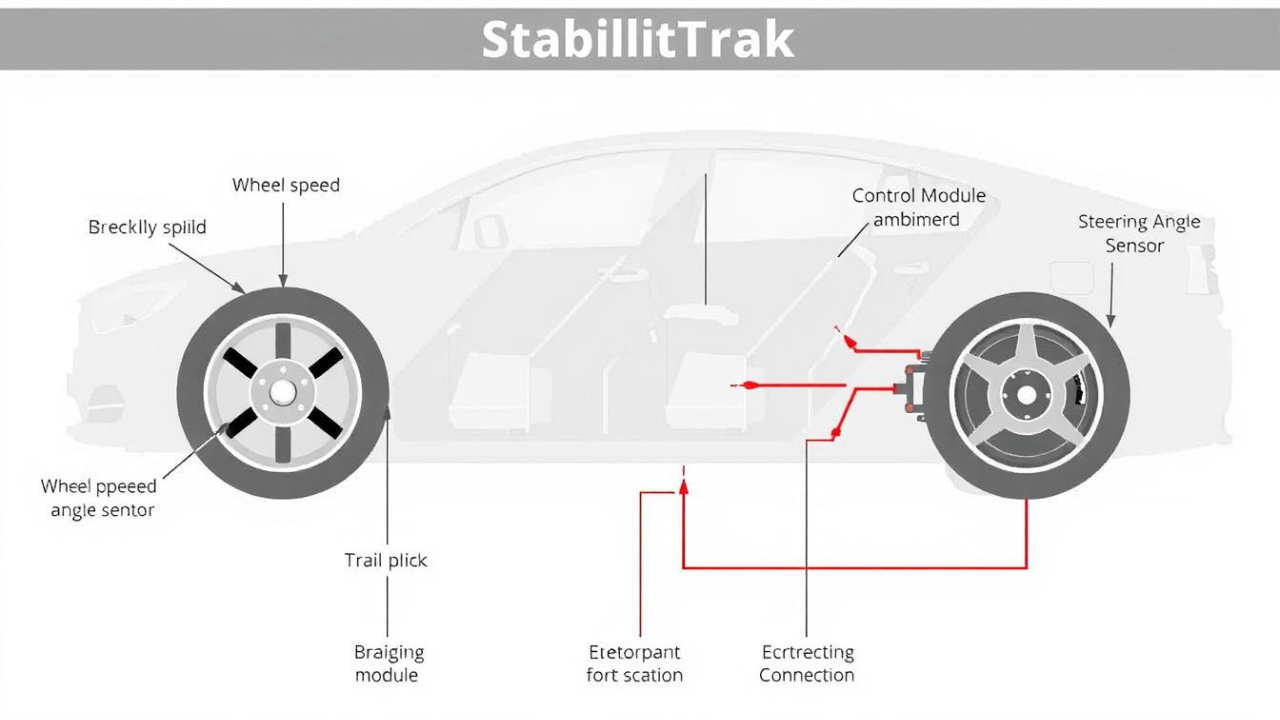
One possible cause is a wheel-speed sensor problem. These sensors help the vehicle determine how quickly each wheel is turning. If one sensor becomes damaged, dirty, or develops an electrical fault, the system may receive incorrect information.
Another possibility is a steering-angle sensor issue. StabiliTrak needs to know the direction the steering wheel is pointing so it can compare the driver’s steering input with the vehicle’s movement.
A weak battery or charging-system problem can also cause unusual dashboard warnings. Modern vehicles depend heavily on stable electrical power, so low voltage can sometimes produce multiple warning messages.
Engine-related faults may also be connected. On some vehicles, an engine or throttle problem can cause StabiliTrak to be disabled because the system cannot safely control engine power when needed.
A warning can even appear temporarily after certain conditions, but repeated warnings should not simply be ignored.
What Should You Do When the Light Comes On?
First, stay calm and pay attention to how the vehicle behaves. If the vehicle feels normal and the warning appears without obvious handling problems, drive carefully and arrange for the vehicle to be checked.
If the dashboard shows a message such as “StabiliTrak Off”, the system may not be providing its normal stability assistance. Avoid aggressive acceleration, sudden steering, and unnecessarily high speeds until the issue has been diagnosed.
If the vehicle is difficult to control, loses power, or displays several serious warning lights at once, it is safer to stop in an appropriate location and seek professional assistance rather than continuing to drive.
How Is a StabiliTrak Problem Diagnosed?
Finding the real cause usually requires more than simply replacing a part. A technician can use a diagnostic scanner to check stored fault codes from the vehicle’s computer systems.
The technician may then inspect wheel-speed sensors, wiring, steering components, battery voltage, brake-related components, and engine systems depending on the codes found.
This matters because two vehicles showing the same StabiliTrak message may have completely different underlying problems. Replacing parts without proper diagnosis can waste money and may not solve the warning.
If your vehicle is still under warranty, checking the manufacturer’s warranty information before paying for repairs may also be worthwhile.
Can You Keep Driving With the StabiliTrak Light On?
That depends on the warning and the vehicle’s behavior. A vehicle that drives normally may still be able to move safely for a short distance, but you should remember that the stability-control function may be unavailable.
The safest approach is to reduce your speed, avoid difficult road conditions when possible, and have the problem checked promptly.
If the warning disappears after restarting the vehicle but returns later, do not assume the problem is permanently fixed. Intermittent electrical or sensor problems can come and go before becoming more obvious.
Final Thoughts
StabiliTrak is an important safety system that helps a vehicle maintain stability when driving conditions become challenging. When its warning appears, the message should be treated as useful information rather than something to ignore.
The two key points are simple: understand what StabiliTrak is designed to do, and investigate the reason for any warning. A proper diagnosis can identify whether the issue involves a sensor, electrical system, engine component, or another part of the vehicle. Acting early can help keep the vehicle safer and potentially prevent a small problem from becoming a larger repair.