
Introduction to Multi-Story Content
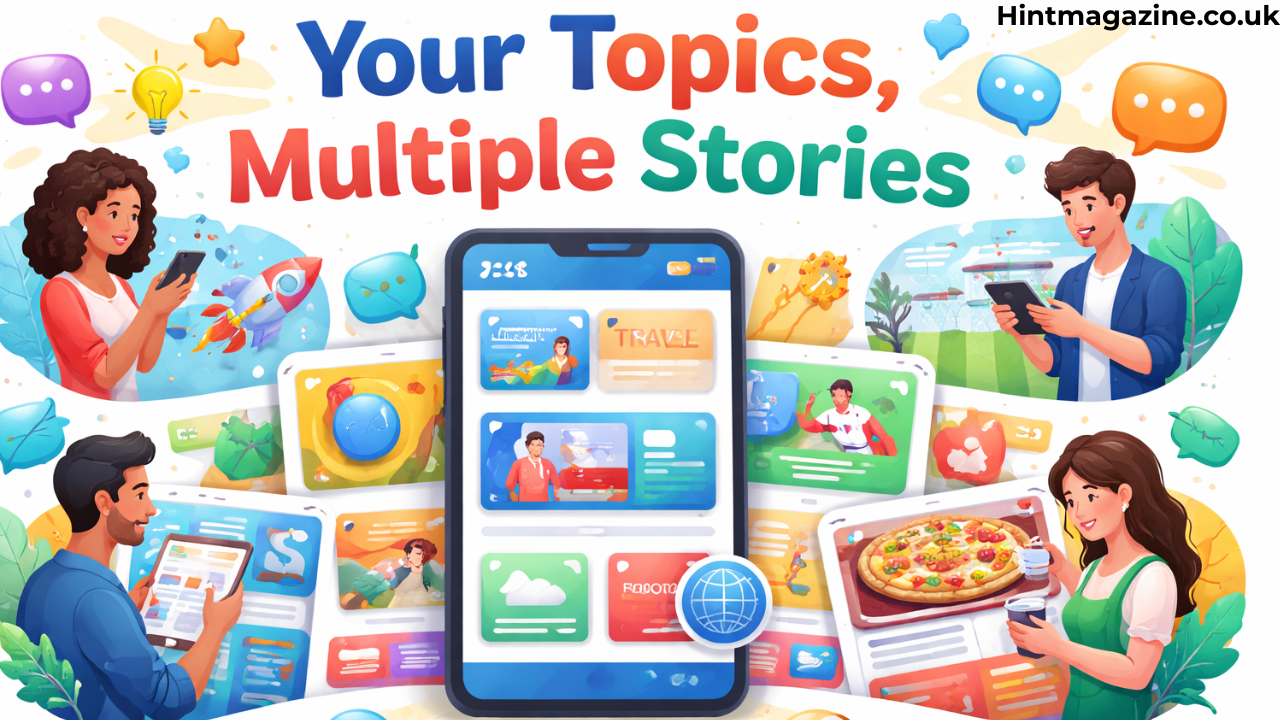
Have you ever felt stuck staring at a blank page, thinking you’ve already said everything about a topic? Here’s the truth most creators miss: a topic is never just one story. It’s more like a tree. One trunk, endless branches. This is exactly what “your topics multiple stories” is all about.
What Does “Your Topics Multiple Stories” Mean?
At its core, this idea means taking a single subject and exploring it through different lenses. Instead of repeating yourself, you reshape the message. The topic stays the same, but the story changes. Think of it like light hitting a diamond. Each angle reflects something new.
Why This Approach Matters Today
Attention is short. Audiences are diverse. Search engines want depth, not repetition. When you create multiple stories from one topic, you satisfy all three. You stay relevant, visible, and interesting without constantly chasing new ideas.
The Power of a Single Topic
One strong topic can carry more weight than ten weak ones. The secret lies in how you unfold it.
One Core Idea, Many Angles
Every topic has layers. Peel one, and another appears. That’s where stories live.
Emotional Angles
Emotion changes everything. A topic explained logically feels different when told through fear, hope, or excitement. The facts stay the same, but the impact multiplies.
Informational Angles
Here, you focus on clarity. Definitions, explanations, and breakdowns. This story educates and builds authority.
Practical Angles
This is the “how-to” side. Readers love actionable stories. They want to walk away knowing exactly what to do next.
Why Humans Love Multiple Stories
Stories aren’t just entertainment. They’re how we understand the world.
Storytelling Is Hardwired in Us
Long before screens and books, stories were survival tools. Different stories taught different lessons, even when the core message was the same.
Different Stories for Different Minds
Not everyone learns the same way. Some connect emotionally. Others prefer logic. Multiple stories ensure no one is left out.
Types of Stories You Can Create from One Topic
Let’s get practical. Here are common story types you can spin from a single idea.
Personal Experience Stories
These build connections. Sharing a journey, failure, or success makes your topic human and relatable.
Educational Stories
These explain the “why” and “how.” They position you as a guide, not just a storyteller.
Inspirational Stories
These focus on possibility. They show what could happen if someone takes action.
Problem-Solution Stories
Every problem hides a story. Present the pain, then walk the reader toward relief.
Case Study Style Stories
Real examples add credibility. They turn theory into proof.
Turning One Topic into Multiple Content Formats
Stories don’t live in one place anymore.
Blog Articles
Each angle becomes a standalone article while still supporting the same core theme.
Social Media Posts
Short stories, quick insights, or single moments pulled from a larger idea.
Videos and Scripts
Visual storytelling brings emotion to life and reaches a different audience.
Podcasts and Audio Stories
Voice adds intimacy. The same topic feels personal when spoken.
SEO Benefits of Multiple Stories from One Topic
Search engines reward depth, not noise.
Keyword Variations and Semantic Reach
Multiple stories naturally introduce related terms. This expands visibility without stuffing keywords.
Internal Linking Opportunities
Each story can link to another. This creates a strong content ecosystem.
Improved Topical Authority
Covering a topic from many angles signals expertise and trust.
How to Find New Angles for the Same Topic
Running out of ideas usually means asking the same questions.
Ask Different Questions
What, why, how, when, and who all unlock different stories.
Change the Perspective
Tell the story from a beginner’s view, then from an expert’s.
Adjust the Audience
A story for students differs from one for professionals, even on the same topic.
Real-Life Example of One Topic, Multiple Stories
Let’s simplify this with a breakdown.
Topic Breakdown
One topic. For example, learning a new skill.
Story Expansion
You can tell a struggle story, a step-by-step guide, a motivational piece, and a mistake-focused lesson. Same topic. Four unique narratives.
Mistakes to Avoid When Creating Multiple Stories
Not all repetition is useful.
Repeating the Same Message
If the story doesn’t change, neither will engagement.
Ignoring Audience Intent
Every story should match what the reader wants at that moment.
Tools and Techniques to Organize Multiple Stories
Structure keeps creativity from turning chaotic.
Content Mapping
Map one topic to many subtopics before writing.
Story Frameworks
Use consistent frameworks to maintain clarity and flow.
Using Multiple Stories for Branding
Brands are built on consistency and variety.
Building Trust Through Variety
Different stories show depth and reliability.
Consistency Without Boredom
Your voice stays the same, but the delivery evolves.
The Role of Emotion in Story Variations
Emotion is the glue.
Fear, Hope, and Curiosity
Each emotion frames the topic differently and drives action.
Relatable Human Moments
Small, real moments often tell the biggest stories.
Long-Term Value of Multi-Story Content
This approach isn’t just efficient. It’s sustainable.
Evergreen Potential
Stories stay relevant when they focus on timeless ideas.
Content Repurposing at Scale
One idea can fuel months of content across platforms.
Conclusion
One topic is never just one story. It’s a universe waiting to be explored. When you learn to see multiple narratives within a single idea, creativity stops feeling exhausting and starts feeling infinite. Instead of chasing new topics, you unlock the hidden potential in the ones you already have.
FAQs
How many stories can one topic realistically produce?
As many as there are perspectives. There’s no fixed limit.
Will multiple stories confuse my audience?
No, if each story has a clear purpose and angle.
Is this approach good for SEO?
Yes, it builds topical authority and natural keyword coverage.
Do I need different formats for each story?
Not always. Format choice depends on audience behavior.
Can beginners use this strategy?
Absolutely. It simplifies content creation instead of complicating it.